Appendix - Electric Vehicles
Electric vehicles are now the preferred option for many field service companies, due to the environmental and economic advantages they can bring. There are a number of potential considerations when scheduling electric vehicles, including:
- Reduced travel costs for electric vehicles
- Areas where certain vehicles are not permitted
- Recharging of electric vehicles
Travel Costs
In a mixed fleet of electric and non-electric vehicles, it may preferable for the resources using electric vehicles to travel further, due to the reduced mileage cost.
This can be represented by setting the cost per kilometre (cost_km) attribute to a lower value for resources using electric vehicles. The DSE will then account for this when scheduling, balancing it against all other considerations that contribute to the overall schedule score.
Restricted Access
Sometimes a resource may need to be driving an electric vehicle (or other 'green' vehicle type) in order to access particular activities.
This can be represented by either region-based or skill-based constraints, with the resource region or skill dependent on the vehicle that they are using.
Electric Vehicle Recharging
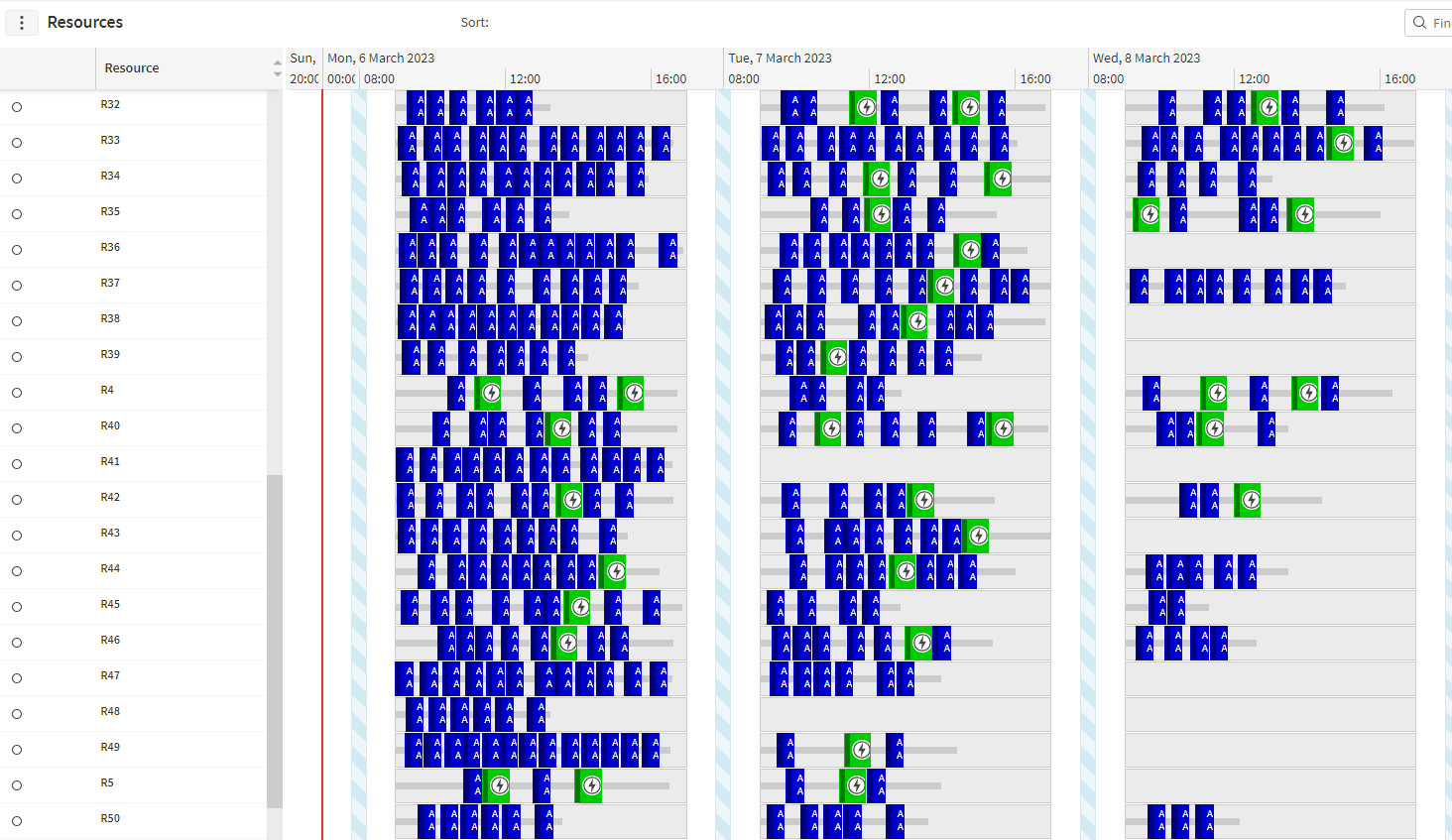
One concern when using electric vehicles is that they tend to have lower range than other vehicles, and the time needed to refuel can be significant. This is especially true if there is limited availability of recharging stations.
The scheduling system supports two models for handling this. The first option is an implicit model, where additional time is added to a resource's journey whenever the total travel in the shift exceeds a threshold value. The second option is an explicit model based on representing the vehicle range as a type of part that is consumed while travelling.
For details of the implicit model, see the 'Travel Cost Model' section in the 'Costs and Values' concepts guide. For details of the explicit model, see the 'Vehicle Parts' section in the 'Parts' concepts guide.