Schedule to Plan
A recurring requirement can be scheduled either at one interval from the due date of the previous occurrence of the requirement—which is called scheduled to plan—or at one interval from the real date when the previous occurrence of the requirement is completed— which is called scheduled to actual.
The schedule to plan concept includes a lower bound and an upper bound that are called Schedule to Plan: Low and Schedule to Plan: High in Maintenix. If a task is completed within the window defined by the lower and upper bound, it is within its planned schedule, and the next occurrence of the task is scheduled from the due date for the occurrence that was just completed.
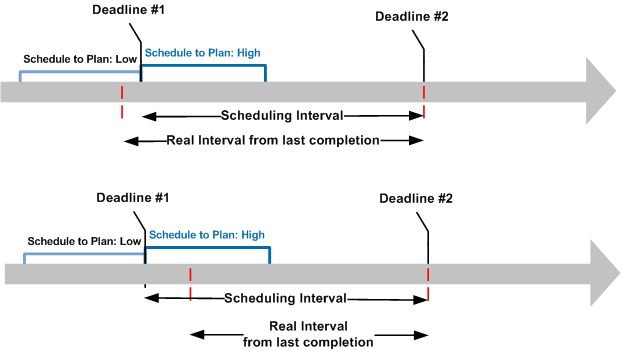
The diagram below shows two scenarios using schedule to plan, both tasks being completed within the schedule to plan window. The deadline of the next occurrence is the same in both scenarios, because it is scheduled from the previous occurrence's due date using the scheduling interval of the task definition; only the real intervals are different.
Figure: Schedule to plan scenarios
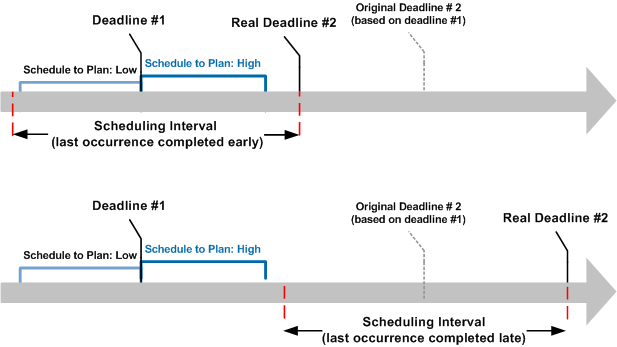
If the task is completed outside of the scheduled to plan window, it is treated automatically as a task that is scheduled to actual. The diagram below shows two scenarios where the task is completed outside of its schedule to plan window. Note that the deadlines of the next occurrence are different in each scenario but the interval is the same. By default in Maintenix, the schedule to plan lower and upper bounds are set to zero (0) in task definitions; when both are set to zero, the task is always scheduled from the actual date, not the planned date.
Figure: Task completed outside of scheduled plan window