Handle Result
The result returned from scheduling is called a Scheduling Plan and is handled automatically by the IFS Optimization Framework. In order to use the result the returned scheduling entities have corresponding methods for handling the data returned. These methods will have to be overridden in the PL/SQL package file in the Scheduling Model. Custom application logic can be added in these methods based on each scheduling entity returned. It's also possible to add custom application logic that should happen before handling all the returned entities, e.g. clearing out old data. The method Import_Pre_Processing can be overridden for this purpose. Similarly it's also possible to add custom application logic that should happen after handling all the returned entities, e.g. start processing the returned data. The method Import_Post_Processing can be overridden for this purpose. The entity Plan is the head entity for the Scheduling Plan and is handled first.
Handled entities and corresponding methods
| Entity | Method |
|---|---|
| Aggregate_Member | Accept_Aggregate_Member |
| Aggregated_Activity | Accept_Aggregated_Activity |
| Allocation | Accept_Allocation |
| Allocation_Data | Accept_Allocation_Data |
| Allocation_Operation | Accept_Allocation_Operation |
| Allocation_Part | Accept_Allocation_Part |
| Appointment_Offer | Accept_Appointment_Offer |
| Appointment_Summary | Accept_Appointment_Summary |
| Explanation_Message_Param | Accept_Explan_Message_Param |
| Explanation_Outcome | Accept_Explanation_Outcome |
| Explanation_Outcome_Alloc | Accept_Explan_Outcome_Alloc |
| Explanation_Outcome_Message | Accept_Explanation_Outcome_Msg |
| Explanation_Response | Accept_Explanation_Response |
| Isochrone_Point | Accept_Isochrone_Point |
| Plan | Accept_Plan |
| Plan_Area | Accept_Plan_Area |
| Plan_Break | Accept_Plan_Break |
| Plan_Deletion | Accept_Plan_Deletion |
| Plan_Depot_Transfer | Accept_Plan_Depot_Transfer |
| Plan_Point | Accept_Plan_Point |
| Plan_Polygon | Accept_Plan_Polygon |
| Plan_Resource | Accept_Plan_Resource |
| Plan_Route | Accept_Plan_Route |
| Plan_Split_Resource_Order | Accept_Plan_Split_Res_Order |
| Plan_Travel | Accept_Plan_Travel |
| Plan_Travel_Part_Usage | Accept_Plan_Travel_Part_Usage |
| Resource_Movement | Accept_Resource_Movement |
| Schedule_Exception | Accept_Schedule_Exception |
| Schedule_Exception_Data | Accept_Schedule_Exception_Data |
| Suggested_Dispatch | Accept_Suggested_Dispatch |
| Suggested_Split_Res_Order | Accept_Suggested_Split_Res_Ord |
| Travel_Detail | Accept_Travel_Detail |
Example

Updates from PSO Workbench
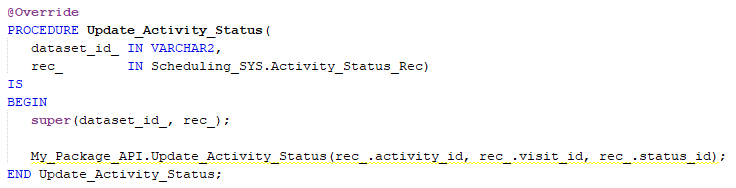
Updates made in the PSO Workbench will be handled in a similar way to the Scheduling Plan but in a separate broadcast. The updated scheduling entities have corresponding methods for handling the updated data. These methods will have to be overridden in the PL/SQL package file in the Scheduling Model. Custom application logic can be added in these methods based on each updated scheduling entity. It's also possible to add custom application logic that should happen before handling all the updated entities. The method Update_Pre_Processing can be overridden for this purpose. Similarly it's also possible to add custom application logic that should happen after handling all the updated entities, e.g. start processing the updated data. The method Update_Post_Processing can be overridden for this purpose. The entity Input_Reference is the head entity for Workbench updates and is handled first.
Handled entities and corresponding methods
| Entity | Method |
|---|---|
| Activity_Status | Update_Activity_Status |
| External_Change_Req_Resource | Update_Ext_Change_Req_Resource |
| External_Change_Request | Update_External_Change_Request |
| External_Change_Request_Item | Update_Ext_Change_Request_Item |
| Input_Reference | Update_Input_Reference |
| Object_Deletion | Update_Object_Deletion |
| Schedule_Event | Update_Schedule_Event |
| Schedule_Exception_Response | Update_Schedule_Except_Resp |
| Visit_Part | Update_Visit_Part |
Example